

“The Wound is the place where Light enters you.” ~ Rumi

The word spirituality is used so often that it sometimes loses its meaning and significance. It can be associated with ego, as in how spiritual someone can be. Also, there are many people who do not believe in a higher power and the word spirituality just doesn’t resonate.
Yet I feel that spirituality can be an amazing tool for mental health. This is my personal definition of spirituality: spirituality is a creative force that connects me to the wise parts of myself and also to something greater than the material world. Spirituality gives meaning to my struggles and my life as a whole. I feel like having faith, however you define this, is an essential part of recovering from mental illness. Healing mental illness is more spiritual than we know because it requires understanding deep aspects of self and life. Moreover, spiritual tools, like meditation or prayer, can be significant resiliences for recovery.
Spirituality doesn’t need to be seen as a specific religion (although it can be) or a threat to rationality; instead, it can be unique energy that can help connect you to positive resources in yourself and in community. If spirituality feels like the wrong word and has negative connotations for you, perhaps try another word. Another way of thinking about spirituality is asking yourself, “What is sacred to you?” Whatever is sacred to you, can generate feelings of strength, love, and compassion, helping you through difficult times.
For me, self-compassion, cultivating gratitude and curiosity, focusing on purpose and meaning, and engaging in creative expression are significant parts of what helps me feel connected to what I consider a higher power.
What is sacred to you and/or what helps you feel deeply connected, is unique to you. There are so many ways – through movement, prayer, community, or spending time in your garden – that you can nurture this positive connection that elicits feelings like peace, awe, or faith. Mental illness can be a rough ride. In hard times, this deeper, larger perspective and connection can literally be life saving.
There are specific practices people use to connect to spirit or to find ease from their suffering. Meditation is a great example of this. It is known that meditation can reduce anxiety and depression, and it is used in many healing settings, even in mental health inpatient centres. An online articles, called, “What meditation can do for your mind, mood, and health,” outlines research on meditation and mental health: “A research review published in JAMA Internal Medicine in January 2014 found meditation helpful for relieving anxiety, pain, and depression. For depression, meditation was about as effective as an antidepressant” (2014). Isn’t that amazing? The essence of being present with breath and training the mind to let go of thoughts, witnessing instead of being wrapped up in them, can help create mental health.

People also achieve this presence and calm through movement. We already know of the physical benefits of movement but the spiritual benefits can also be huge. The use of breath in yoga can create energy in the body, still the mind, and reduce stress hormones. I feel a deep calm moving through yoga poses while also feeling an aliveness. I also feel more connected to the planet and other humans when I do yoga.
For many people, nature and/or animals are their spiritual source. The calm, beauty, and stillness of being outdoors plus the connection to our planet and living things can ground us and bring joy.
Dreams can also connect you to your spirituality. I remember a particularly powerful dream of having to leave my drum in the winter forest to escape a windy snowstorm and when I went back looking for it, it was buried. It was too unsafe to rescue it, and I had to leave it to flee the forest. I had the feeling during the dream that I was lost and directionless and woke up feeling part of me was gone. This dream has layers of meaning to my personal journey. Through examining it, I was able to connect with my deeper unconscious and allow the insights of the dream to inform my life.

A main component of spirituality is self-love which we have touched upon in many posts. It allows us to have hope, patience, and courage. It helps us become more empathetic, accepting, and open.
The more compassion we feel for ourselves while experiencing anxiety, depression and other mental illness symptoms correlates with our ability to navigate these challenging states. The Buddhist writer Cheri Huber says that accepting your symptoms instead of judging them can be helpful for recovery (1999). She recommends that in depression, throw a “depression party” (1999). Find a cozy blanket, watch a favourite movie and eat popcorn (or hang out with a loved one and drink tea), and let the body relax into the state that it is. Instead of fighting the low energy, and the low mood, let it be. Lean into the feelings and offer it space rather than having self-judgement (1999).
In my mental health recovery, I have had to see what was worthy even when my life felt broken. I have had to reframe beliefs about my life and derive self-esteem from different things. I could not, for example, derive self esteem from being with a partner or a parent, from work, money or how I looked. Instead, I derived my strength from whether I enjoyed my days, whether I had positive connection with myself and others, whether I had time in nature and whether I found my hobbies meaningful. Basically, I stepped outside of cultural norms of success to find my sense of self in others things. I didn’t feel this strength at first. I was so vulnerable but seeds of self-compassion, and hope were spiritual tools that helped me heal.
When I was recovering from my last episode in Bamfield, I wrote everyday. I had a ritual of walking two or three times a day. I read inspirational material. My dreams became significant, either bringing to light the dark material in my experience or sending me meaningful dreams. A larger resilience was growing in me because I was reframing that time in my life to have meaning. I was using my pain to heal.
Like a camera lens, we shift the focus from the pain generated by our thinking to steady rhythm of our heart’s pulse. We focus on what is happening in the now. While we cultivate an encouraging inner compassion, we move away from the destructive beliefs about ourselves. We can restructure our inner voice, but we must also gain this skill of perspective through being more present.
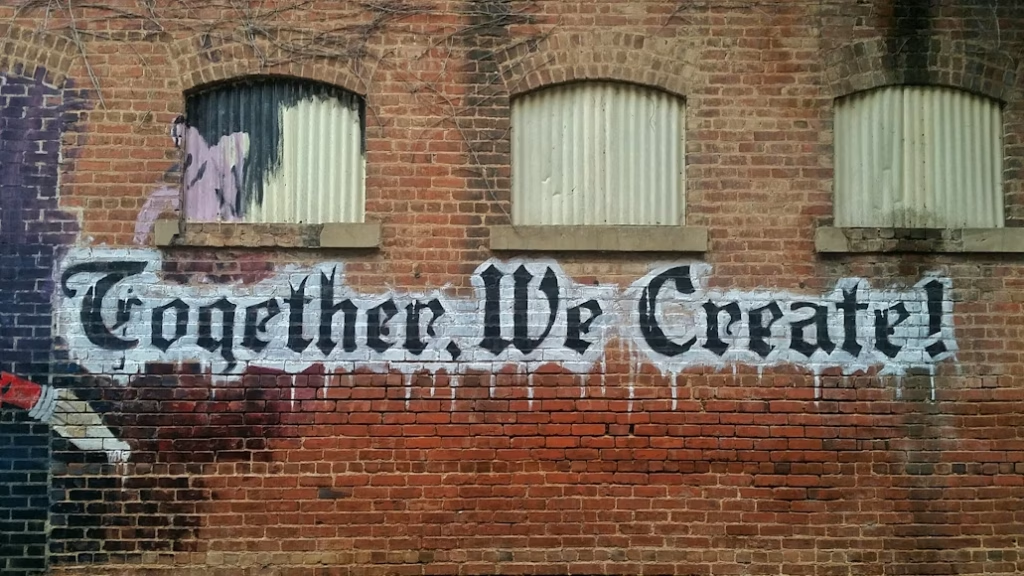
Creativity is a powerful positive energy that we can draw on in difficult times. Writing and art are the greatest parts of my spiritual healing, and they help me find a greater meaning in life.
Creativity is an expression of ourselves. Throughout my journey with mental illness writing and art have been integral to healing. The act of being creative is meditative, expressive and integrating. Often when I am in the grip of negative emotions or a thought spiral, I write a poem or piece of creative writing, and I feel my energy change. It is empowering to give voice to our sadness, our anger, our frustrations and fear.
Mental illness, although it has been devastating at times, has also shaped the positive parts of myself and given my life deep purpose. It wasn’t a path I would have chosen but it chose me, and I continually work at my health so I can live well with a mental illness instead of feeling broken by it. I try to connect to the deeper meanings of life to help me on my journey.
Okay, are you ready to dive into making art? 🎨
Therapeutic Arts Activity
Create a simple daily spiritual practice that brings peace and gratitude.
Instructions
Engage is your spiritual practice for one week. It could be prayer, creating an altar, engaging in movement, creating art, writing, dance, or a vision board. The sky is the limit:)
Materials
- There are so many materials you could use but you may not need any so I am leaving it up to you.
Once you’ve completed this activity, here are some questions as guidelines for your personal explorations:
1. How do you feel about the word spiritual?
2. Can you name five activities that bring you a sense of peace, awe, and perspective?
3.What did you do for this activity? How did this activity feel?
4. How can a sense of spirituality be a resource for your mental health? If you do not identify with spirituality, what else brings you meaning that is helpful for your mental health?
❤️❤️❤️ With care and kindness, Meegan
In the spirit of creating a community of reflection and art making, your comments are welcome. If you choose to leave a comment, it is important to know I respect your privacy. Your information will not be given, lent, rented, or sold to anyone. However, when making a comment on the site, your IP address and browser user will be collected. Please see full Privacy details on my Privacy Policy Page Privacy Policy. If you are having a mental health emergency, please take care of yourself, and call 911 or take yourself to emergency at your closest hospital.
Sources:
Harvard Health Publishing (2014). What Meditation Can Do for Your Mind, Mood, and Health. https://www.health.harvard.edu/staying-healthy/what-meditation-can-do-for-your-mind-mood-and-health- Health
Huber, Cheri (1999). The Depression Book. Keep It Simple Books: USA.
Discover more from The Art of Mental Health
Subscribe to get the latest posts sent to your email.